The Rest That Rebuilds: What Ayurveda Understands About New Mothers That Modern Britain Has Forgotten
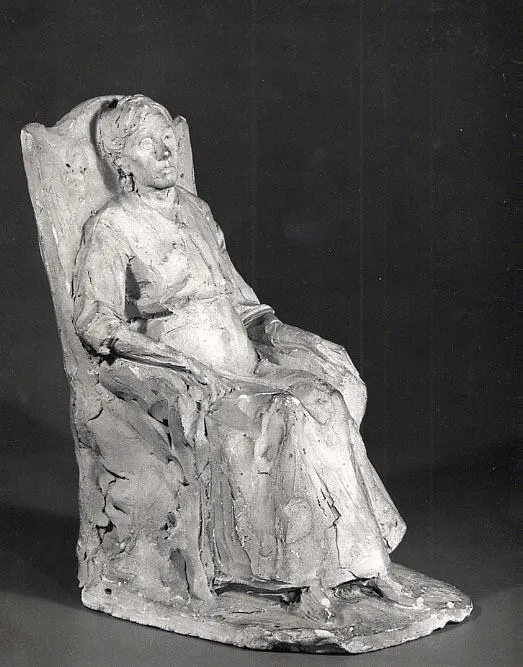
Photo: Gaston Lachaise, CC0, via Wikimedia Commons
The Pressure to Bounce Back
Somewhere between leaving the delivery suite and the six-week GP check, British new mothers receive a message that is rarely spoken aloud but is nonetheless pervasive: the crisis is over, the baby is healthy, now get on with it.
The NHS postnatal framework, while well-intentioned and under considerable resource pressure, is largely focused on the infant. The mother receives a midwife visit or two in the first fortnight, a health visitor check, and then, at six weeks, a brief GP appointment that typically covers contraception and a cursory enquiry about mood. There is no sustained, systematic support for the profound physiological depletion that birth represents. There is no cultural permission to be genuinely, deeply unwell in the aftermath of one of the most demanding physical events a human body can undergo.
The result is a generation of women attempting to function—breastfeeding, managing households, often returning to work—while running on reserves they have not yet had the opportunity to replenish.
Ayurveda has understood this problem for millennia. And its response is both radical and, upon reflection, entirely obvious.
The Ayurvedic Understanding of Birth
In Ayurvedic medicine, childbirth is understood as a profoundly vata-aggravating event. The process of labour and delivery involves immense movement, release, and exposure—all qualities that increase vata dosha, the principle governing the nervous system, movement, and the subtle body. After birth, a woman's body is considered to be in a state of significant vata excess: open, depleted, cold, and vulnerable to disturbance.
This is not a poetic metaphor. It describes, with considerable accuracy, the physiological reality of the postpartum body: the abrupt hormonal withdrawal, the blood loss, the physical trauma of delivery, the sleep deprivation that begins immediately. The body has given enormously. It requires, in proportion, enormous replenishment.
The traditional Ayurvedic response to this is a period of intentional confinement lasting approximately forty-two days—sometimes called sutika paricharya. This is not imprisonment. It is a structured, supported period during which the new mother is relieved of all responsibilities except feeding herself and her infant, surrounded by community care, and actively nourished back to strength.
Warmth as Medicine
The cornerstone of postpartum Ayurvedic care is warmth—in every sense. The new mother is kept physically warm, protected from cold air and cold foods, and surrounded by the warmth of human presence and attention.
This translates practically into a diet of warm, well-cooked, easily digestible foods rich in healthy fats and gentle spices. Ghee—clarified butter—is central to the postpartum Ayurvedic diet, prized for its ability to lubricate and rebuild the tissues depleted by birth. Warming soups, dals, and khichdi (a simple preparation of rice and lentils) form the basis of meals. Galactagogue spices such as fenugreek, fennel, and cumin support milk production while simultaneously supporting digestion.
Cold, raw, or heavily processed foods are avoided entirely. This is not asceticism. It is the application of a simple principle: a depleted digestive fire cannot afford to expend energy on difficult-to-process foods. Every calorie consumed should be easily absorbed and genuinely rebuilding.
Abhyanga—warm oil massage—takes on particular significance in the postpartum period. Daily massage with warm sesame oil, traditionally performed by a female relative or a trained postpartum practitioner, helps to settle the nervous system, reduce vata excess, support uterine recovery, and provide the essential human touch that new mothers frequently receive only from their infants. In India, this practice is so established as to be unremarkable. In Britain, it requires deliberate seeking out, but postpartum Ayurvedic practitioners and doulas offering this support are increasingly available.
Where This Diverges from Standard Guidance
It would be dishonest not to acknowledge the tensions between Ayurvedic postpartum wisdom and current NHS guidance. NHS advice encourages new mothers to be active relatively quickly, to eat a balanced diet that includes plenty of fruits and vegetables (including raw ones), and to seek social engagement as a protective factor against postnatal depression.
These recommendations are not wrong. They emerge from a genuine evidence base and a genuine concern for maternal wellbeing. But they operate within a framework that does not account for the full physiological complexity of postpartum depletion, and they exist within a cultural context that systematically undervalues rest.
Ayurveda does not suggest that new mothers should be sedentary indefinitely, nor that they should be isolated. It suggests that the first six weeks represent a window of particular vulnerability and particular opportunity—that the investment of deep rest and nourishment during this period pays dividends for years of maternal health that follow. This is not anti-medical. It is complementary to medical care, and it addresses a dimension of postpartum health that the NHS, through no fault of its own, does not have the capacity to deliver.
Women interested in integrating Ayurvedic postpartum support should, of course, maintain their NHS care and discuss any significant dietary or lifestyle changes with their midwife or GP, particularly in the context of breastfeeding.
The Community Question
Perhaps the most challenging aspect of Ayurvedic postpartum wisdom to translate into contemporary British life is its assumption of community. The forty-two-day confinement only functions when there are people to cook the meals, hold the baby, perform the massages, and provide the undemanding, sustaining presence that a depleted woman needs.
For many British women—living in nuclear families, far from extended family, in urban environments where neighbourly intimacy is rare—this community simply does not exist in the traditional sense. This is not a reason to dismiss the Ayurvedic framework. It is a reason to build intentionally toward it.
This might mean: asking for specific help in advance rather than the vague 'let me know if you need anything'; arranging a meal rota among friends and family; hiring a postpartum doula for even a few sessions; being explicit with a partner about what the postpartum period actually requires. It means treating the organisation of support as a serious antenatal task, equivalent in importance to preparing the nursery.
Permission to Receive
Underlying all of this is something that British women, in particular, often find genuinely difficult: permission to receive care. To be tended. To be, for a defined and bounded period, the one who is looked after.
Ayurveda does not frame this as weakness. It frames it as intelligence—the recognition that a mother who is truly restored is capable of far more sustained, joyful, and present parenting than one who has pushed through depletion on sheer determination.
The bounce-back culture asks new mothers to demonstrate resilience by returning quickly to their former selves. Ayurveda offers a different proposition: that the mother who emerges from a properly supported fourth trimester is not her former self. She is something more—rebuilt at a deeper level, with reserves that will sustain her and her family for years to come.
That, rather than the speed of her recovery, is the measure worth aspiring to.