The Kettle Knows: An Ayurvedic Reading of Britain's Favourite Brews
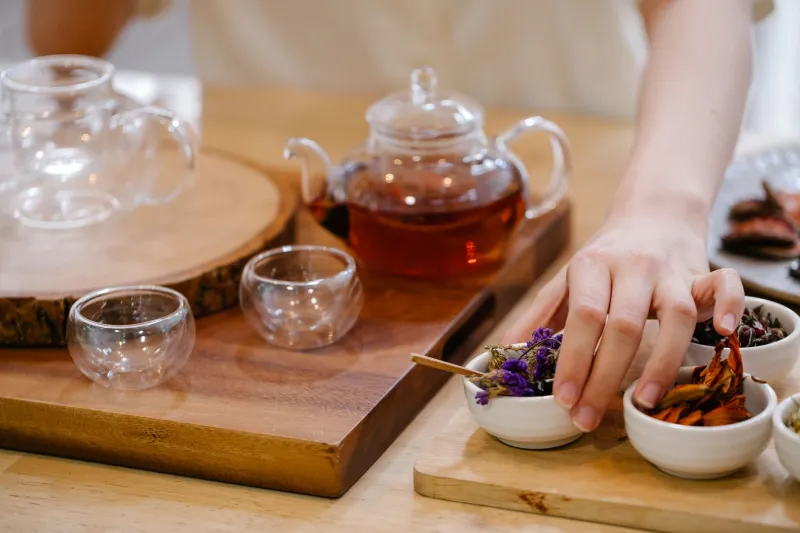
There are few certainties in British life, but the kettle is one of them. Whatever the weather, whatever the news, whatever the hour — the kettle goes on. We drink roughly 100 million cups of tea a day in this country, and yet most of us give remarkably little thought to what we are actually pouring into ourselves.
Ayurveda, which has been thinking carefully about hot infusions for several thousand years, would suggest that this is a missed opportunity. Not because tea is a problem — quite the opposite. Warm drinks are among the most quietly therapeutic habits a person can keep. But the kind of warmth matters, and so does the body receiving it. Here is a gentle tour of the British tea cupboard, dosha-aware and entirely without judgement.
Builder's Tea: The Loyal Workhorse
Strong, dark, with milk — the tea that built the nation's sites and still props up its office kitchens. In Ayurvedic terms, black tea is heating and stimulating. It mobilises energy quickly, which is precisely why it works: it provokes Vata and Pitta while pacifying a sluggish Kapha.
If you feel heavy, foggy and cold on a grey Tuesday, builder's tea is genuinely appropriate medicine. If you are already wired, anxious, or running hot, that same cup will push you further out of balance — the classic mid-afternoon jitter followed by a deeper slump. If black tea is your anchor, take it after food rather than on an empty stomach, and consider it a morning drink rather than an all-day drip.
Earl Grey: The Perfumed Diplomat
Bergamot gives this brew its distinctive citrus lift, and citrus in Ayurveda is an appetite awakening flavour — sour, light, and clarifying. Earl Grey suits Kapha constitutions beautifully and makes an excellent late-morning cup when digestion is meant to be at its peak.
For Vata types, the astringency of black tea combined with bergamot's sharpness can feel subtly depleting, especially in autumn and winter when the cold, dry qualities already dominate. A slice of lemon and a drop of honey in hot water with ginger does a similar job with more grounding. Pitta types should treat Earl Grey as an occasional pleasure rather than a daily habit — the heating quality accumulates.
Peppermint: The Cold Compress in a Cup
Peppermint is what Ayurveda calls sheetal — cooling. It is the herbal equivalent of opening a window in a stuffy room. For Pitta-dominant people, or anyone in the grip of summer irritability, acid reflux, or a short temper in a hot office, peppermint is close to perfect.
But cooling has a shadow side. In Britain's damp winter months, or for Vata and Kapha types who already run cold, a steady peppermint habit can chill digestion precisely when it needs stoking. If your hands are always cold and your digestion slow, swap winter peppermint for fennel or ginger and save the mint for July.
Chamomile: The Evening Handshake
Chamomile's reputation as a sleep aid is deserved, but Ayurveda values it for something broader: it settles Vata, the dosha of movement, worry and overstimulation. A cup of chamomile is not merely a sedative; it is a signal to the nervous system that the day's demands are over.
The British habit of drinking chamomile while still answering emails rather undoes the point. The brew works best as a ritual — kettle, cup, screens off. For Kapha types it can feel a little heavy as a nightly habit; lighter options like lemon balm or rose may suit better.
Chai: The Original Spiced Medicine
Masala chai was never just a drink — it was a decoction of digestive spices, brewed to fire up agni, the digestive flame. Cardamom, ginger, clove, cinnamon and black pepper each carry warming, clarifying qualities, and together they make chai arguably the most Ayurvedically sophisticated thing in any British supermarket.
For Britain's cold, damp climate and Kapha-heavy winters, chai is close to ideal. Made well — real spices simmered, not a syrup-laden high-street approximation — it is warming without being harsh. Vata types benefit from the milk's grounding quality; Pitta types should go easy on the ginger and clove.
Choosing With Intention
None of this requires you to abandon your favourite mug. It simply asks a question Ayurveda has always found useful: what does my body need today, and what is this cup actually giving it? Cold day, cold hands, slow morning — choose warming. Hot day, hot temper, frayed edges — choose cooling. Wound-up at midnight — choose calming.
The kettle will keep going on regardless. But with a little awareness, what comes out of it can do rather more than get you through the afternoon.