The Kitchen as Pharmacy: Reclaiming Food as Medicine in an Age of Supplements
Walk into any health food shop in Britain today and you will encounter an overwhelming array of capsules, powders, tinctures, and tablets — each promising to address a specific deficiency, enhance a particular function, or optimise some aspect of human performance. The UK supplement industry is now valued at over £500 million annually and growing. Yet by most meaningful measures of population health — rates of chronic disease, mental health outcomes, energy and vitality — we are not obviously thriving.
This is not a coincidence. It reflects, at least in part, a fundamental confusion about where health actually originates.
Ayurveda — the ancient Indian science of life that informs the philosophy of Sukha Wellness — has a clear and unambiguous position on this matter. Food is medicine. Not a metaphor for medicine. Not a complement to medicine. Food, prepared with understanding and consumed with awareness, is the primary vehicle through which health is built and maintained. Supplements, in the Ayurvedic framework, are precisely that: supplementary. They address specific, time-limited deficiencies. They do not replace the foundational work of eating well.
The Problem with the Supplement-First Mindset
The appeal of supplements is entirely understandable. They are convenient, quantifiable, and marketable. They offer the reassuring sensation of doing something — taking action — without requiring the slower, more demanding work of changing how one cooks and eats. And in certain circumstances, they are genuinely necessary. Vitamin D supplementation, for instance, is recommended for most people in the UK during autumn and winter, given the latitude and the limited sunlight available. This is a legitimate, evidence-based recommendation.
The difficulty arises when the supplement model becomes the default approach to nutrition — when people take omega-3 capsules rather than eating oily fish, consume isolated probiotic strains rather than fermented foods, or reach for a multivitamin as a substitute for dietary variety. In these cases, something important is lost.
Ayurveda teaches that food contains not merely isolated nutrients but complex, synergistic combinations of qualities — tastes (rasas), energetic properties (virya), and post-digestive effects (vipaka) — that work together in ways that cannot be replicated by extracting a single compound and encapsulating it. Modern nutritional science is beginning to arrive at similar conclusions through the concept of food synergy: the idea that nutrients work more effectively in their whole-food context than in isolation.
What Ayurvedic Food Philosophy Actually Looks Like
Ayurvedic dietary wisdom is not a rigid prescription but a set of intelligent principles that can be applied flexibly across different cultural contexts — including the British one.
Central among these principles is the concept of food combining. Ayurveda identifies certain combinations of foods as incompatible — not because of a philosophical objection, but because they are considered to produce conflicting digestive demands that result in ama, or undigested residue. Some of these combinations will be familiar: milk combined with sour or salty foods is considered problematic, as is the mixing of fish and dairy. Others are less intuitive — fruit, for instance, is traditionally eaten alone or before other foods, rather than as a dessert after a heavy meal, because its rapid digestive transit conflicts with the slower processing of proteins and starches.
These are not arbitrary rules. They reflect an empirical understanding, developed over centuries of observation, of how the body responds to different foods in combination. Whether or not every principle maps perfectly onto contemporary nutritional science, the underlying orientation — that how we eat matters as much as what we eat — is increasingly well-supported by research into areas such as gut microbiome function and glycaemic response.
Three Simple Kitchen Practices Rooted in Ayurvedic Tradition
Golden Milk (Haldi Doodh)
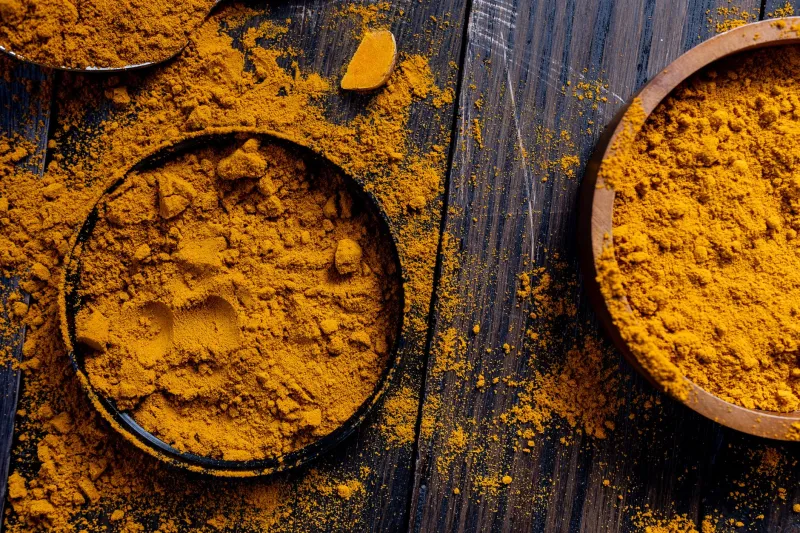
Perhaps the most widely known Ayurvedic food remedy, golden milk has attracted considerable attention in recent years — sometimes appropriately, sometimes as a vehicle for overclaiming. At its core, it is simply warm milk (dairy or plant-based) combined with turmeric, black pepper, and a small amount of fat — traditionally ghee or coconut oil.
The science behind this combination is sound. Curcumin, the active compound in turmeric, has poor bioavailability on its own. Black pepper contains piperine, which has been shown to enhance curcumin absorption by up to 2,000%. Fat further supports absorption, as curcumin is fat-soluble. This is not a modern nutritional discovery — it is traditional knowledge encoded in a recipe.
To prepare: Warm 250ml of oat or whole milk gently. Add half a teaspoon of ground turmeric, a pinch of black pepper, a small amount of ghee or coconut oil, and sweeten lightly with raw honey once the milk has cooled slightly (to preserve the honey's properties). Consume in the evening.
Kitchari: The Ayurvedic Reset Meal
Kitchari — a simple preparation of split mung beans and white basmati rice cooked with digestive spices — is considered one of Ayurveda's most therapeutic foods. It is easy to digest, nutritionally complete, and deeply nourishing without placing strain on a compromised digestive system. In periods of illness, transition, or digestive distress, it serves as a gentle reset.
A basic preparation: Rinse equal quantities of split yellow mung dal and white basmati rice. In a heavy pan, warm a tablespoon of ghee and add a teaspoon each of cumin seeds, mustard seeds, and ground coriander, along with half a teaspoon of turmeric and a pinch of asafoetida. Add the rinsed grains, stir to coat, then add four to five times the volume of water. Simmer until fully soft. Season with rock salt and finish with fresh coriander. This is a meal in itself, and one that the body recognises as nourishment in the most fundamental sense.
Spiced Stewed Fruit
Rather than eating fruit cold from the refrigerator — which Ayurveda considers difficult to digest for many constitutions, particularly in winter — lightly stewing seasonal fruit with warming spices transforms it into something genuinely therapeutic. Stewed pears or apples with cardamom, cinnamon, and a few cloves make an excellent breakfast or mid-morning dish that is simultaneously simple, affordable, and deeply aligned with Ayurvedic principles of seasonal eating.
A Reorientation, Not a Revolution
None of this requires abandoning modern life or adopting an entirely different cuisine. It requires, rather, a shift in perspective — one that places the kitchen, and the considered act of preparing food, at the centre of a health practice rather than the periphery.
The supplement bottle has its place. But it should not be the first place we look. Before reaching for a capsule, Ayurveda would have us ask: what is my food doing? How am I eating it? When, and with what awareness?
These are ancient questions. In the context of contemporary British wellness culture, they are also urgent ones.