The Hidden Cost of Disconnection: What Ayurveda Teaches Us About Loneliness and Vital Force
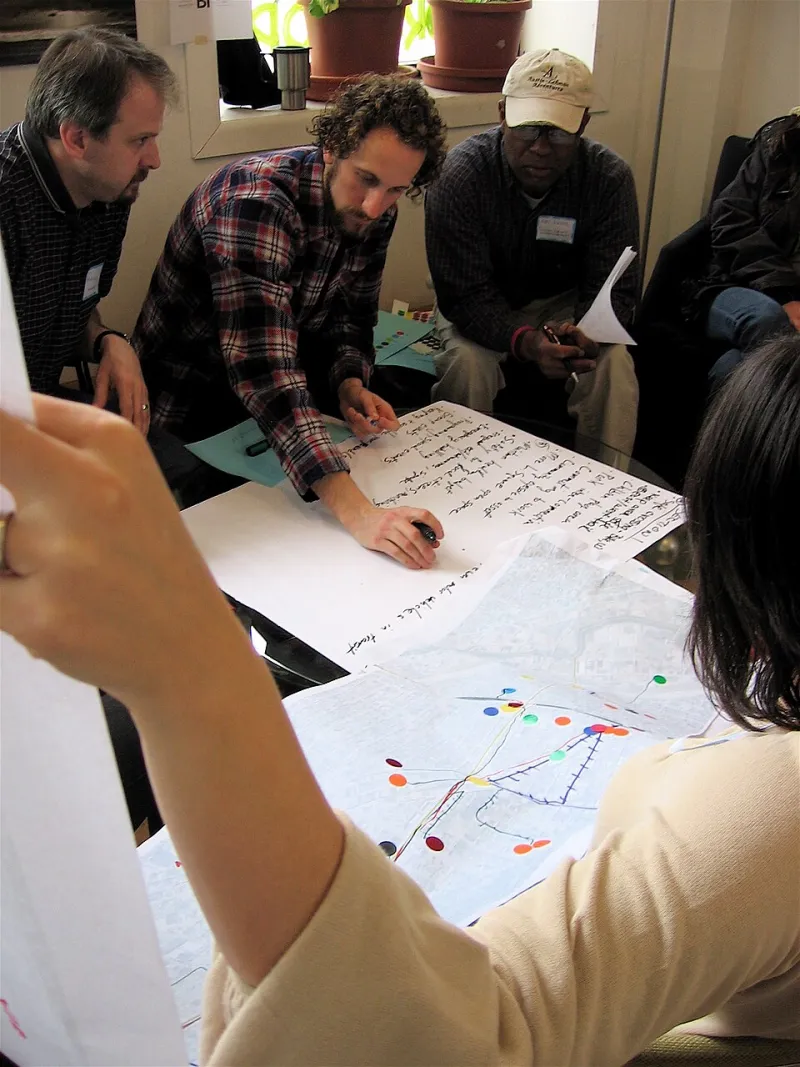
Photo: Paul Smith from Baltimore, MD, USA, CC BY 2.0, via Wikimedia Commons
A Nation Quietly Unravelling
In 2018, the United Kingdom became the first country in the world to appoint a Minister for Loneliness — a gesture that acknowledged, at governmental level, what millions of individuals had long been experiencing in private. Subsequent surveys have only deepened the picture. The Campaign to End Loneliness estimates that over nine million people in the UK often or always feel lonely. Among young adults aged sixteen to twenty-four, the rates are, counterintuitively, among the highest of any demographic group. The assumption that loneliness is primarily a condition of old age has been comprehensively dismantled.
The health consequences are now well-documented in epidemiological literature. Chronic loneliness is associated with elevated inflammatory markers, impaired immune function, disrupted sleep architecture, accelerated cognitive decline, and a significantly increased risk of cardiovascular disease. The former Surgeon General of the United States, Dr Vivek Murthy, described loneliness as a public health crisis equivalent in mortality risk to smoking fifteen cigarettes daily.
These findings, striking as they are, tend to be framed in the language of risk factors and statistical associations — the vocabulary of epidemiology. Ayurveda offers something different: a philosophical and physiological explanation for why human connection is not a social nicety but a biological necessity, encoded in the very substance of life itself.
Ojas: The Body's Most Precious Reserve
At the heart of Ayurvedic vitality theory lies the concept of ojas — a term that resists neat translation but might be understood as the body's supreme refined essence, the final and most subtle product of complete digestion and metabolic transformation. Classical texts describe ojas as the distilled result of all that we consume, experience, and integrate: the nourishment we absorb from food, the impressions we receive through our senses, the quality of our sleep, the depth of our relationships, and the degree to which we live in alignment with our own nature.
Ojas is understood to be the physical substrate of immunity, vitality, mental clarity, and what might be called spiritual luminosity — the quality that manifests as a genuine radiance in those who possess it in abundance. It is said to reside primarily in the heart, and to circulate through the body as a kind of foundational life force that sustains all other tissues and functions.
Critically, ojas is not merely produced — it can be depleted. The classical texts enumerate its causes of diminution with striking relevance to contemporary life: excessive physical or mental exertion, chronic fear or grief, anger and hostility, poor nutrition, insufficient sleep, and — with particular pertinence to the present discussion — the absence of loving connection.
How Isolation Depletes the Vital Essence
Ayurveda has long recognised that human beings are not self-contained physiological units but relational creatures whose biology is shaped by the quality of their social environment. The Sanskrit concept of Sattva — the quality of clarity, harmony, and goodness — is understood to be cultivated not only through individual practice but through immersion in community, through the exchange of genuine care, and through the experience of being known and valued by others.
When these conditions are absent, the system does not merely feel the lack — it begins to draw on its reserves. Chronic loneliness, from an Ayurvedic perspective, creates a sustained state of Vata aggravation: the dosha of air and ether, already predisposed to anxiety, instability, and fragmentation, becomes further disturbed by the absence of the grounding, warming, and nourishing influence of human presence. This Vata excess then begins to erode ojas — the very substance that buffers the individual against stress, illness, and mental instability.
The physiological parallels with contemporary research are striking. Elevated cortisol and inflammatory cytokines — the measurable biological signatures of chronic loneliness — correspond closely to what Ayurveda describes as the consequences of depleted ojas and aggravated Vata: impaired digestion, disturbed sleep, weakened immunity, and a progressive loss of the resilience that enables the organism to adapt and recover.
The Texture of Modern British Isolation
Loneliness in twenty-first century Britain does not always look as one might expect. It exists alongside packed commuter trains and bustling open-plan offices. It inhabits flats where neighbours have never exchanged names. It flourishes in social media environments that offer the simulation of connection while delivering, for many, only its absence.
The dissolution of traditional community structures — the decline of religious congregations, the disappearance of local institutions, the fragmentation of extended family networks, the increasing mobility of the workforce — has removed many of the contexts in which deep, habitual, and unperformed human connection once occurred naturally. What remains requires more deliberate effort, and for individuals whose Vata is already elevated by the pace and uncertainty of modern life, that effort can feel insurmountable.
For those experiencing depression or anxiety alongside loneliness — conditions that frequently co-occur, and that are themselves associated with Vata and ojas depletion — the withdrawal from social engagement can become self-reinforcing. The more depleted one's vital force, the less capacity one has to reach toward the very connections that might restore it.
Rebuilding Ojas: Ancient Remedies for a Modern Crisis
The Ayurvedic approach to replenishing ojas is, at its core, an approach to rebuilding the conditions in which life can be genuinely nourishing. It operates simultaneously at the level of the individual body, the daily routine, and the relational environment.
Dietary nourishment forms the foundation. Ojas-building foods are those that are fresh, wholesome, sweet, and deeply nourishing: warm milk with ashwagandha or saffron — a preparation described in classical texts as one of the most direct means of replenishing vital essence; soaked almonds and dates; ghee; root vegetables; and slow-cooked grains. These are foods that require time and care to prepare — and the act of preparing them with attention is itself, in Ayurvedic understanding, a form of ojas cultivation.
Sleep is perhaps the single most powerful ojas-restoring practice available. Classical texts describe sleep as one of the three pillars of life, and contemporary sleep science fully corroborates this assessment. For those whose loneliness manifests as nocturnal restlessness and early waking — characteristic Vata disturbances — establishing a consistent, grounding evening routine becomes a form of physiological self-repair.
Conscious community is, however, where the most targeted intervention lies. Ayurveda recognises that the company one keeps — Satsanga, meaning the association of the good — is itself a health practice. This does not require grand social gestures. It may mean investing in a single reciprocal friendship with genuine depth; joining a community garden, a walking group, or a choir; participating in a local meditation circle; or simply committing to regular, unhurried conversation with a neighbour.
Brahmacharya — often translated as moderation and wise use of vital energy — counsels against the kind of digital overconsumption that creates the sensation of social engagement while generating, in physiological terms, only further stimulation and depletion. Reducing screen-based pseudo-connection in favour of embodied, present, and reciprocal human encounter is, in Ayurvedic terms, one of the most direct routes to ojas restoration.
Connection as Medicine
Ayurveda understood, long before the language of public health existed, that the human being is a social organism whose vitality depends on the quality of its relationships as surely as it depends on food, sleep, and breath. The loneliness epidemic is not merely a social problem or a mental health challenge — it is, in the most literal Ayurvedic sense, a crisis of vital force.
The path back to ojas is not found in self-optimisation or individual wellness practice alone. It is found in the willingness to be present with others — to offer and receive the nourishment of genuine human attention. In a culture that has grown sophisticated at the performance of connection while losing the substance of it, this may be the most countercultural health practice of all.