What Your Wrist Already Knows: An Introduction to Pulse Reading as Preventative Health Literacy
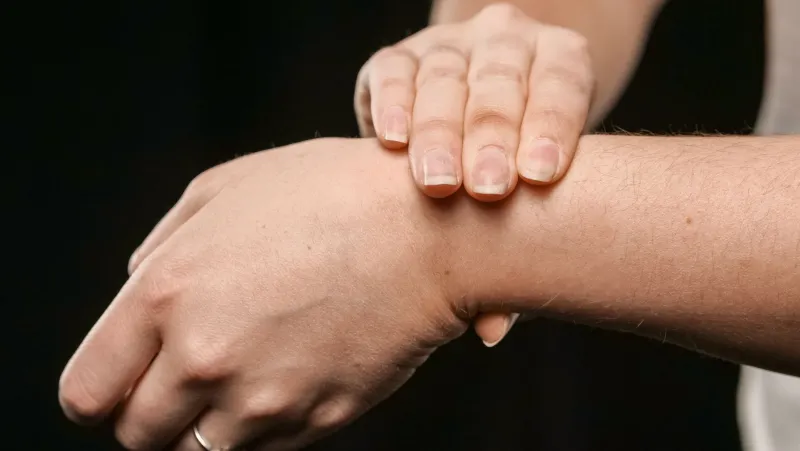
Place three fingers lightly on the inside of your wrist, just below the base of your thumb, and press gently. Beneath your fingertips, you will feel the pulse of your radial artery — a rhythm so familiar that most of us register it only when we are alarmed, and otherwise ignore it entirely.
Ayurvedic physicians have been listening to this pulse for thousands of years. Not merely counting its rate, as a modern nurse might, but attending to its depth, quality, strength, rhythm, and the subtle information carried within each beat. The practice is called nadi pariksha — nadi meaning channel or flow, pariksha meaning examination or inquiry. In trained hands, it is one of the most sophisticated diagnostic tools in the history of medicine. In your own hands, with patience and instruction, it can become something equally valuable: a daily practice of self-literacy that allows you to notice the earliest signs of imbalance, long before they develop into symptoms that require clinical attention.
The Philosophy Behind the Practice
To understand why nadi pariksha works, it is helpful to understand what Ayurveda believes the pulse is actually communicating. In the Ayurvedic model, the pulse is not simply a measure of cardiac function. It is understood as the living expression of the doshas — Vata, Pitta, and Kapha — moving through the body's subtle channels. Each dosha has a characteristic quality of movement that can be felt in the radial pulse, and the relative prominence of each quality at any given moment offers a window into the body's current state of balance or imbalance.
This is a fundamentally different orientation to the body than the one most British people have been taught. Rather than waiting for a symptom to emerge and then seeking its cause, nadi pariksha invites a continuous, attentive relationship with the body's moment-to-moment intelligence. It is preventative medicine in the most literal sense: the art of perceiving what is shifting before it has shifted entirely.
The Three Finger Positions
The classical technique of nadi pariksha involves placing the index, middle, and ring fingers on the radial artery of the right wrist (for women, the left wrist is traditionally assessed first, though both are examined). Each finger corresponds to one of the three doshas:
- Index finger (closest to the thumb): Vata
- Middle finger: Pitta
- Ring finger: Kapha
The fingers are placed with graduated pressure — the index finger rests most lightly, the middle finger with moderate pressure, and the ring finger with slightly firmer pressure, reflecting the relative depth at which each dosha is thought to express itself in the pulse.
A practitioner trained in nadi pariksha can feel, in the quality of movement beneath each finger, the relative strength and balance of each dosha. They are not counting beats; they are perceiving qualities — and these qualities have been described with remarkable consistency across thousands of years of Ayurvedic literature.
The Language of the Pulse
Ayurvedic texts describe the dosha pulses through evocative comparisons to the movements of animals — a device that, far from being fanciful, is actually a highly efficient means of encoding qualitative information.
Vata pulse is described as moving like a snake — irregular, quick, light, and somewhat unpredictable. When Vata is in balance, this movement has a kind of fluid grace. When Vata is aggravated, the pulse becomes erratic, very rapid, or thin and difficult to locate consistently. Many people familiar with anxiety will recognise this quality intuitively — the fluttery, hard-to-catch quality of a nervous system on high alert.
Pitta pulse moves like a frog — active, sharp, and with a distinctive bounding quality. A balanced Pitta pulse is strong and regular, with a sense of purposeful momentum. When Pitta is aggravated, the pulse becomes more forceful, almost aggressive in its quality — the physiological signature of the fire element in excess.
Kapha pulse is described as moving like a swan — slow, deep, and undulating. In balance, it carries a quality of steady grace. When Kapha is aggravated, the pulse becomes sluggish, heavy, or difficult to detect beneath the ring finger — the feeling of water that has become still to the point of stagnation.
For those beginning to explore nadi pariksha independently, the goal is not to immediately identify these qualities with precision. It is, initially, simply to sit with the pulse daily and notice what is there — to develop a relationship with its rhythms over time, so that when something changes, you recognise the change.
Building a Daily Practice
The most valuable application of self-pulse reading for the non-specialist is not diagnosis but tracking. The pulse is not a static thing. It shifts with the time of day, with what you have eaten, with your emotional state, with the season, and with the gradual accumulation of dosha imbalance. By taking your pulse at the same time each morning — ideally before you have eaten, drunk, or engaged with any screen — you begin to establish a baseline understanding of your own constitutional rhythm.
The morning is considered the optimal time for this practice in Ayurvedic tradition, both because the body is in its most undisturbed state and because the early hours carry a particular clarity of perception. Sit quietly. Place your three fingers as described. Close your eyes. Breathe. And simply attend to what you feel beneath your fingertips for two to three minutes.
Keep a brief journal of your observations — not elaborate analysis, but simple notes. Quick and erratic today. Heavy and slow this morning. Strong and slightly forceful after a difficult meeting. Over weeks and months, patterns will begin to emerge that offer genuine insight into the relationship between your lifestyle choices and your physiological state.
What to Seek Professional Guidance For
It is important to be clear about what self-pulse reading is and is not. It is a practice of self-awareness and preventative attention. It is not a clinical diagnostic tool, and any significant health concern should be assessed by a qualified medical practitioner. Nadi pariksha, as practised by an experienced Ayurvedic physician, is a far more sophisticated process than anything described here — and for those who wish to explore the practice in depth, a consultation with a qualified Ayurvedic practitioner is strongly recommended.
The value of developing your own pulse literacy lies not in replacing that expertise, but in arriving at any consultation — whether with an Ayurvedic physician or a conventional GP — with a more articulate understanding of your own body's patterns. The patient who can say my pulse has felt unusually rapid and light for the past three weeks, coinciding with a period of poor sleep and heightened anxiety is offering information of genuine clinical value.
The Quiet Intelligence of the Body
Nadi pariksha is, at its core, a practice of listening. In a culture that has become extraordinarily proficient at generating health data — wearable devices, blood glucose monitors, heart rate variability trackers — there is something quietly radical about a form of health literacy that requires only three fingers, a quiet room, and the willingness to pay attention.
The pulse has always been there, carrying its intelligence, waiting to be heard. The ancient physicians who developed nadi pariksha understood that the body, given sufficient attention, is its own most reliable early warning system. That understanding has not aged. It has simply been waiting for us to return to it.