What Your Skin Is Trying to Tell You: Reading Complexion as a Map of Inner Health
The Skin as Diagnostic Text
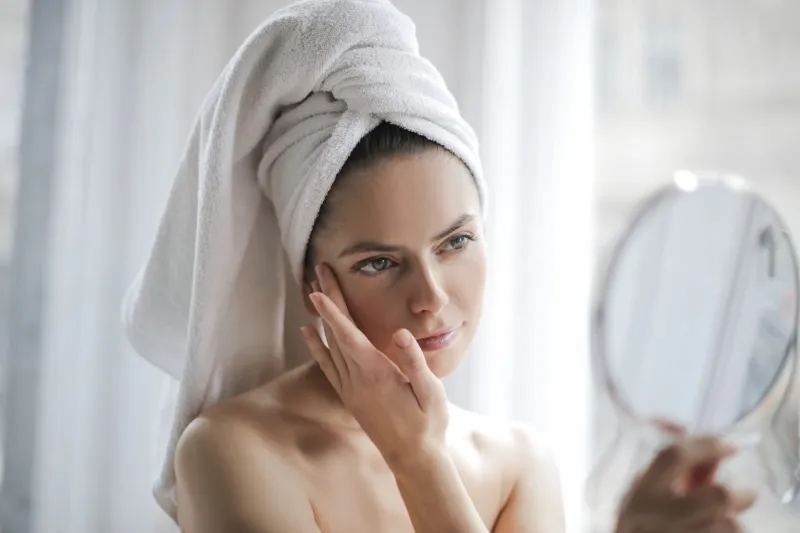
British skincare is a sizeable industry. Walk through any high street chemist and the shelves dedicated to cleansers, serums, and medicated creams speak volumes about how much time, money, and anxiety we invest in our complexions. Yet for all that topical effort, rates of eczema, rosacea, and adult acne in the United Kingdom continue to rise. The British Association of Dermatologists estimates that eczema alone affects roughly one in five children and one in twelve adults in this country. Something, clearly, is not working.
Ayurveda — the ancient Indian system of medicine that has guided health practice for over five thousand years — would not find this surprising. Its foundational texts describe the skin, or twak, as an external expression of the body's internal environment. A practitioner examining your complexion is not merely cataloguing surface symptoms; they are reading the state of your digestion, your nervous system, your liver function, and the balance of your constitutional energies, or doshas. To treat only the skin, in this view, is to silence a messenger without addressing the message.
The Dosha Signatures on Your Face
Understanding your skin through an Ayurvedic lens begins with recognising that different conditions correspond to different constitutional imbalances.
Pitta — the dosha associated with fire, transformation, and heat — governs metabolism and inflammatory processes. When Pitta becomes aggravated, it often manifests on the skin as rosacea, inflammatory acne, red rashes, and a tendency toward sensitivity and burning sensations. This pattern is particularly common among those whose lives involve sustained pressure, competitive environments, or excessive consumption of spicy, fermented, and acidic foods. In a culture where alcohol is socially embedded and workplace stress is normalised, Pitta-driven skin conditions are, perhaps unsurprisingly, among the most prevalent.
Vata — the dosha of air and movement — governs the nervous system and all processes of circulation and dryness. When Vata is disturbed, the skin frequently becomes dry, rough, and prone to fine lines far earlier than constitutional age would suggest. Conditions such as psoriasis and generalised skin dehydration that fails to respond to moisturiser are often rooted in Vata excess. The digital age, with its disrupted sleep, constant stimulation, and irregular meals, is profoundly Vata-aggravating, which may explain why so many otherwise healthy people in their thirties present with a complexion that feels perpetually parched.
Kapha — the dosha of earth and water — is associated with density, moisture, and stability. In excess, Kapha produces congested, oily skin, enlarged pores, cystic acne concentrated along the jawline, and a general pallor or dullness that no brightening serum seems able to shift. Sluggish digestion and a sedentary lifestyle are classic Kapha aggravators, and the resulting accumulation of ama — unprocessed metabolic waste — tends to surface quite literally on the skin.
Agni, Ama, and the Complexion Connection
Central to Ayurvedic dermatology is the concept of agni, or digestive fire. When agni burns cleanly and consistently, nutrients are properly absorbed and metabolic waste is efficiently eliminated. When agni is compromised — whether through irregular eating, incompatible food combinations, emotional suppression, or chronic stress — digestion becomes incomplete. The residue of this incomplete processing, known as ama, accumulates in the tissues and channels of the body.
The skin, as one of the body's primary eliminative organs alongside the lungs, kidneys, and bowel, often becomes a vehicle for expelling what the gut cannot process. Persistent breakouts, unusual pigmentation, and inflammatory flares that worsen after certain meals or during periods of digestive discomfort are frequently ama-related. This is why Ayurvedic practitioners are as interested in your bowel habits and appetite patterns as they are in your skincare routine.
Modern nutritional science offers partial corroboration of this ancient insight. Research published in journals including the British Journal of Dermatology has increasingly linked gut microbiome health with inflammatory skin conditions, lending scientific weight to the Ayurvedic observation that the gut and skin are in constant dialogue.
Rethinking the Approach to Common Conditions
For those dealing with acne, the Ayurvedic recommendation is rarely to strip the skin of oil. Rather, it involves identifying whether the acne is Pitta-driven (inflammatory, red, and painful), Kapha-driven (congested and cystic), or Vata-driven (dry and scattered), and adjusting diet, lifestyle, and herbal support accordingly. Pitta-type acne often improves significantly when cooling foods — cucumber, coriander, coconut, and bitter greens — replace heating ones, and when the liver is gently supported through herbs such as neem or turmeric.
Eczema, in Ayurvedic understanding, is frequently associated with both Vata and Pitta imbalance alongside compromised gut integrity. Practitioners often focus on rebuilding the intestinal lining, reducing inflammatory dietary triggers such as nightshades and processed sugar, and using nourishing oils — particularly sesame for Vata types — to restore the skin's lipid barrier from both inside and out.
Rosacea, with its characteristic flushing and persistent redness, is almost invariably viewed through the Pitta lens. Reducing heat-generating inputs — whether dietary, environmental, or emotional — forms the core of management, alongside herbs with cooling and anti-inflammatory properties.
Practical Steps Toward Skin That Reflects Genuine Health
None of this is to suggest abandoning conventional dermatological care where it is necessary. Rather, it is an invitation to expand the conversation. A few principles drawn from Ayurvedic practice can be integrated into daily life without requiring wholesale lifestyle transformation.
Begin by observing the relationship between what you eat and how your skin responds within twenty-four to forty-eight hours. Keep a simple food and skin journal for two weeks. Patterns often emerge that are both illuminating and actionable.
Prioritise cooked, warm, and easily digestible foods, particularly during periods of skin flare-up. The digestive system benefits from this kindness, and the skin tends to respond in kind.
Consider introducing bitter herbs — neem, turmeric, and guduchi — into your daily routine under appropriate guidance. These have been used in Ayurvedic practice for centuries specifically to support the liver and purify the blood, both of which have direct bearing on skin clarity.
Practise abhyanga, the Ayurvedic ritual of self-oil massage, using a constitutional oil suited to your dosha. The skin absorbs what is applied to it, and the practice simultaneously calms the nervous system, supports lymphatic drainage, and nourishes the skin's deeper layers.
Finally, attend to sleep. The hours between ten in the evening and two in the morning are, in Ayurvedic chronobiology, the period during which the liver and skin perform their most significant regenerative work. Routinely shortchanging this window is one of the most reliable ways to dull a complexion that might otherwise glow.
A Different Kind of Skincare
The skin does not lie. It registers what we eat, how we sleep, how we manage stress, and whether our inner ecology is balanced or strained. Ayurveda has always known this. Modern science is catching up. For anyone weary of investing in products that address the appearance of a problem without touching its roots, the Ayurvedic perspective offers something genuinely different: the possibility of skin that is healthy because the body it covers is healthy, too.