Skin Hunger: The Quiet Health Crisis Hiding in Plain Sight Across Modern Britain

A Nation That Has Forgotten How to Be Touched
There is a phrase, rarely used in clinical settings but increasingly relevant, that researchers have begun to employ: skin hunger. It describes the deep physiological and psychological need for physical contact — and its absence. In post-pandemic Britain, skin hunger is not merely a metaphor. It is a measurable health phenomenon affecting a significant proportion of the population, from elderly individuals in care settings to young adults whose social lives migrated almost entirely online during the lockdown years and never quite returned.
A 2021 survey conducted by the Wellcome Trust found that nearly half of UK adults reported a significant reduction in physical contact with others compared to pre-pandemic levels, and that many had not restored those levels even after restrictions lifted. The reasons are complex — social anxiety, changed living arrangements, the normalisation of digital-first relationships — but the consequences follow a predictable biological logic. The human nervous system evolved in an environment of near-constant physical contact. When that contact is withdrawn, the system registers it as a form of threat.
What Ayurveda Understood About Touch Long Before Neuroscience
Ayurveda has never treated touch as incidental to health. The ancient texts describe the skin as the organ most intimately associated with Vata dosha — the constitutional energy governing the nervous system, movement, communication, and the experience of sensation. Every tactile experience, from the warmth of a hand on a shoulder to the deliberate pressure of therapeutic massage, is understood to directly influence the state of Vata.
When Vata is balanced, the nervous system is resilient, sleep is sound, anxiety is manageable, and the body's communicative intelligence — its capacity to register, interpret, and respond to sensory input — functions with clarity. When Vata becomes disturbed, often through isolation, irregular routine, excessive digital stimulation, or physical disconnection from other bodies, the system becomes dysregulated. Anxiety increases. Sleep deteriorates. Immunity weakens. The person feels, in a very literal sense, ungrounded.
This is not mysticism. Contemporary neuroscience has identified the C-tactile afferent fibres — a specific class of nerve fibres in hairy skin that respond exclusively to gentle, slow touch and communicate directly with the brain's social and reward circuitry. When activated, these fibres trigger the release of oxytocin, reduce cortisol, and down-regulate the sympathetic nervous system. In other words, touch is medicine. Its absence is deprivation in the most clinical sense of that word.
The Pandemic Legacy and the Digital Substitution
Britain's relationship with physical contact was already comparatively restrained before the pandemic. Cultural norms around personal space and emotional reserve mean that many people in this country receive considerably less casual physical contact than populations in southern Europe or parts of Asia. The pandemic then removed even what little existed — the handshake, the brief embrace, the incidental contact of crowded commutes — and replaced it with nothing except a screen.
For the elderly, this was particularly devastating. Research from Age UK documented alarming increases in loneliness and cognitive decline during lockdown periods, conditions that Ayurveda would recognise as classic presentations of severe Vata aggravation: anxiety, confusion, insomnia, loss of appetite, and a pervasive sense of disconnection from the body and the world.
For younger adults, the substitution of digital interaction for embodied contact has created a subtler but no less real deficit. Many report feeling simultaneously overstimulated and emotionally hollow — a paradox that makes perfect sense through the Ayurvedic lens. Digital input is processed primarily through the eyes and the cognitive mind; it activates, rather than soothes, the nervous system. It cannot deliver what only physical touch provides.
Abhyanga: The Practice That Changes Everything
Among the most significant contributions Ayurveda offers to this conversation is abhyanga — the practice of warm oil self-massage. Described in the Ashtanga Hridayam, one of the foundational Ayurvedic texts, abhyanga is prescribed as a daily practice for the maintenance of health, not as an occasional indulgence. The text states, with characteristic directness, that one who practises abhyanga regularly is not easily troubled by exertion, age, or disease.
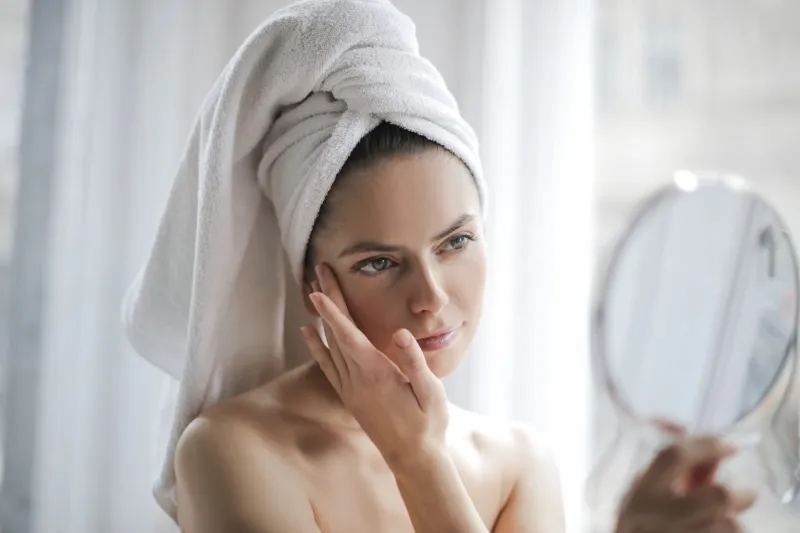
The mechanism, from an Ayurvedic perspective, is the pacification of Vata through the dual action of warmth and sustained touch. Warm sesame oil — deeply penetrating and grounding — is applied to the entire body in long, rhythmic strokes, moving with the direction of the hair and the flow of lymphatic drainage. The practice takes fifteen to twenty minutes and, when performed consistently, produces effects that users frequently describe as transformative: improved sleep, reduced anxiety, softer skin, greater ease in the body, and a sense of inhabiting oneself more fully.
From a physiological standpoint, the benefits are well-supported. Warm oil application to the skin stimulates those same C-tactile afferents that social touch activates. The rhythmic, predictable nature of the strokes signals safety to the nervous system. Lymphatic circulation is gently stimulated, supporting immune function. And the act of attending deliberately to one's own body — of touching oneself with care rather than utility — appears to have measurable psychological benefits, particularly for those who live alone or have limited access to social touch.
Broader Practices: Touch as a Daily Non-Negotiable
Abhyanga is not the only avenue available. Ayurveda encompasses a broader culture of therapeutic touch that includes shirodhara (the meditative application of warm oil to the forehead), pada abhyanga (foot massage, particularly effective before sleep), and various forms of marma therapy — the stimulation of specific vital points on the body's surface that correspond to deeper energetic and physiological functions.
Beyond formal practice, the Ayurvedic worldview encourages a more general reclamation of touch as a legitimate and necessary component of daily life. This might mean resuming physical greetings with friends and family where appropriate, seeking out professional massage therapy without guilt or self-consciousness, or simply spending time in deliberate contact with the natural world — bare feet on grass, hands in soil, the face turned toward sunlight.
For parents, it affirms what intuition already suggests: that holding, carrying, and physically comforting children is not merely emotionally beneficial but physiologically essential for their developing nervous systems.
Reclaiming the Body You Live In
There is something quietly radical about insisting that touch is a health necessity in a culture that has progressively medicalised, commercialised, or eliminated it from ordinary life. Ayurveda has never accepted the separation of the physical from the emotional, or the body from its social environment. The skin, in this understanding, is not a boundary between self and world but a site of constant, necessary exchange.
To restore that exchange — through daily oil massage, through the deliberate rebuilding of physical connection with others, through the simple act of being present in one's own body — is not indulgence. It is, in the most ancient and precise sense of the word, medicine.